You’ve found the right supplier. You’ve confirmed the specification, passed the pre-shipment inspection, and agreed the price. Now comes the part that most buyers think is straightforward — and that regularly turns out to be anything but.
Getting heavy machinery from a factory in Shandong, Henan, or Guangdong to a job site in Lagos, Nairobi, Riyadh, or Jakarta involves a chain of decisions that each carry real financial consequences. Pick the wrong freight method, choose the wrong Incoterm, or arrive at customs with incomplete documentation, and you’ll be paying demurrage fees while your equipment sits idle in a container yard — sometimes for weeks.
This guide covers the freight options available for heavy equipment exports from China, how to understand and choose the right Incoterms, what the real landed cost looks like, and how to get through customs clearance without the surprises that catch so many buyers out.
How heavy equipment is shipped from China: your freight options
Unlike standard cargo that slots neatly into a 20ft or 40ft container, heavy machinery comes in shapes, weights, and dimensions that require more thought about how it physically moves. The three main options are:
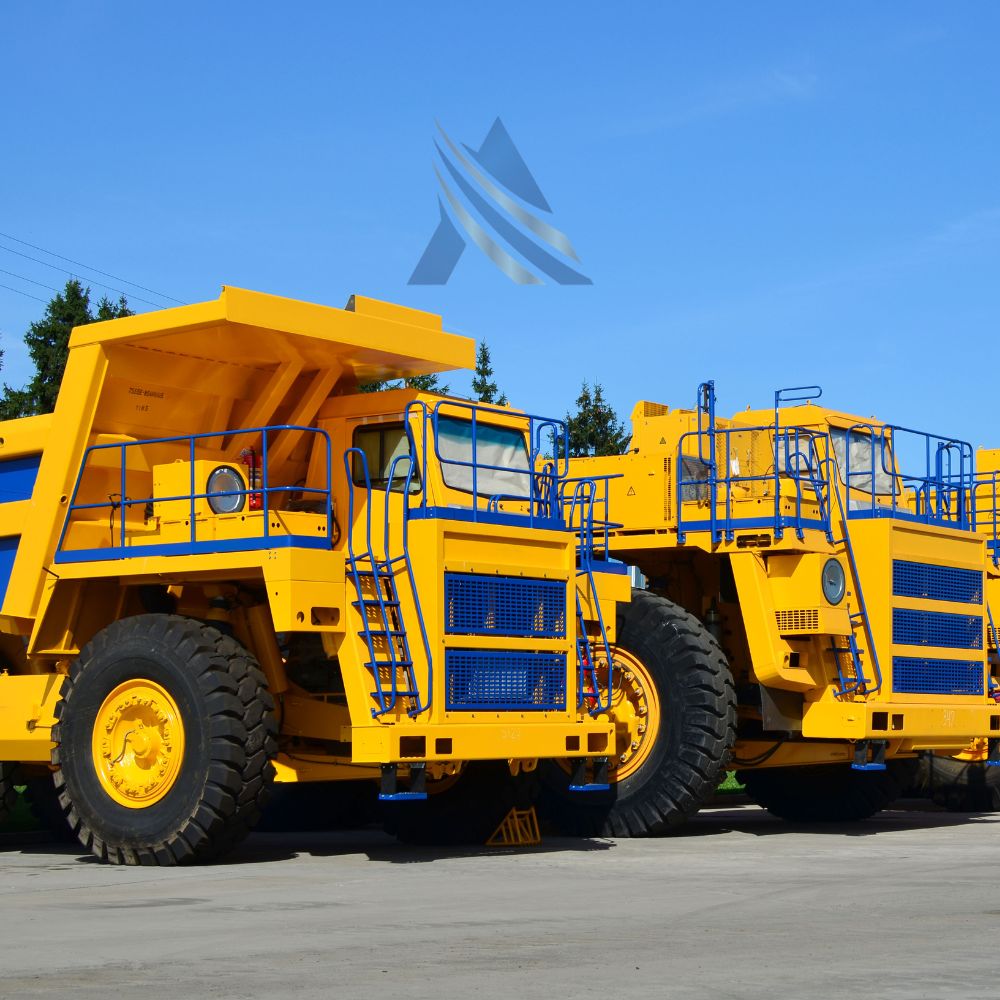
RoRo (Roll-on Roll-off). For self-propelled wheeled equipment — heavy-duty trucks, motor graders, wheel loaders, and similar — RoRo is usually the most practical and cost-effective method. The machine is driven directly onto a purpose-built vessel, secured, and driven off at the destination port. No lifting, no dismantling, no container rental. RoRo services operate regularly from major Chinese ports including Tianjin, Shanghai, and Guangzhou to destinations across Africa, the Middle East, Southeast Asia, and beyond.
Flat rack and open-top containers. For non-self-propelled equipment or oversized items that exceed standard container dimensions, flat rack containers — which have no sides or roof — allow cargo to be loaded by crane and secured with lashing straps. Open-top containers work similarly for tall but otherwise box-shaped loads. Both options add complexity and cost compared to standard container shipping, but they are the right solution for excavators, drilling equipment, large generators, and similar items.
Breakbulk / project cargo. For very large or very heavy items — cranes, modular industrial equipment, oversized fabrications — breakbulk shipping on a general cargo vessel may be the only viable option. This requires specialist freight forwarding expertise, precise port handling coordination at both ends, and significantly more lead time for booking. If your equipment falls into this category, involve a freight specialist early.
Sea freight is almost always the right choice for heavy equipment — air freight is impractical for anything beyond small spare parts. Transit times from major Chinese ports to key international destinations typically run as follows: East Africa (Mombasa, Dar es Salaam) 20–28 days; West Africa (Lagos, Tema) 25–35 days; Middle East (Jebel Ali, Jeddah) 14–22 days; Southeast Asia (Jakarta, Manila) 10–18 days. These are vessel transit times only — add time for inland transport to the port of loading and customs clearance at the destination.
| AGRUVIO TIP RoRo is frequently cheaper and faster than flat rack for wheeled equipment, but not all destination ports handle RoRo vessels. Confirm your destination port’s capabilities before committing to a freight method. We check this for every shipment we manage — it’s a detail that’s easy to miss and expensive to get wrong. |
Understanding Incoterms: choosing the right terms for your situation
Incoterms — International Commercial Terms — are the globally recognised rules that define where the seller’s responsibility ends and the buyer’s begins. They determine who pays for freight, who arranges insurance, and who carries the risk at each stage of the journey. Choosing the wrong Incoterm is one of the most common and most costly mistakes in international machinery procurement.
Here are the four terms most relevant to heavy equipment imports from China, and what each one means in practice:
EXW — Ex Works. The seller’s obligation ends at the factory gate. You are responsible for everything from that point: inland transport to the port, export customs clearance, freight booking, insurance, and all import arrangements. EXW gives you maximum control over the logistics chain but also maximum responsibility. It suits experienced buyers with established freight partners, but it’s a lot to manage if you’re doing this for the first time.
FOB — Free on Board. The seller loads the goods onto the vessel at the named port of loading and handles Chinese export customs clearance. Once the cargo is on board, risk and responsibility transfer to you. FOB is the most widely used Incoterm for China machinery exports and the right choice for most buyers who have a trusted freight forwarder in place.
CFR — Cost and Freight. The seller pays for freight to your named destination port. Risk transfers when the goods are loaded onto the vessel (same as FOB), but the seller handles the freight booking. This is convenient and reduces one coordination step for the buyer, but it means less direct control over carrier selection and freight routing. Marine insurance is still the buyer’s responsibility under CFR.
CIF — Cost, Insurance and Freight. As CFR, but the seller also arranges and pays for marine cargo insurance to the destination port. CIF is common and convenient, but be aware that the insurance policy is taken out by the seller on your behalf — and the minimum coverage level required under CIF terms is often inadequate for high-value equipment. Consider arranging your own additional coverage.
DDP — Delivered Duty Paid. The seller handles everything door-to-door, including import duties and customs clearance at the destination. DDP sounds like the easiest option and often is — but watch the total cost carefully. DDP prices can conceal significant logistics margins and inflated duty estimates that make it considerably more expensive than it appears. It also gives you the least visibility into what you’re actually paying for each component of the delivery.
| REAL TALK For most of our clients sourcing heavy machinery, we recommend FOB with a trusted freight forwarder who knows your destination market well. It gives you the right balance of cost control, visibility, and simplicity. DDP can work well for buyers who genuinely want a single point of contact for everything — but get an itemised breakdown of what’s included before you agree. |
What your landed cost actually includes — and why the ex-factory price is just the start
One of the most reliable ways to get a nasty surprise when importing heavy machinery is to budget based on the ex-factory price alone. The true landed cost — what it actually costs to get the equipment to your yard and ready to operate — is consistently higher than first-time importers expect.
Here is a realistic breakdown of the cost components to account for:
- Ex-factory price. The machine itself, as quoted by the supplier.
- Inland transport (China). Moving the equipment from the factory to the port of loading. For factories in inland provinces, this can be a meaningful cost — particularly for oversized loads that require special permits and low-loaders.
- Export documentation and handling. Port handling charges, export customs declaration fees, and documentation preparation. Typically modest but variable by port.
- Ocean freight. The main vessel cost. Highly variable depending on freight method (RoRo vs flat rack), destination, vessel availability, and market conditions. Get multiple quotes.
- Marine cargo insurance. Typically 0.3–0.8% of the CIF value. Non-negotiable for high-value equipment — and make sure the coverage level is adequate for your cargo.
- Destination port charges. Port handling, terminal fees, and container demurrage (if applicable). These vary significantly by destination and are frequently underestimated.
- Import duties and taxes. Duty rates on heavy machinery vary widely by country and equipment type, and can range from zero to 35% or more. Confirm the applicable rate with your local customs authority or a licensed customs broker before you place the order — not after.
- Customs clearance and brokerage fees. The cost of a licensed customs broker to process your import declaration and release the goods. Worth every penny; do not attempt to clear heavy machinery through customs without professional assistance.
- Inland transport (destination). Moving the equipment from the destination port to your site. For heavy or oversized loads, this requires specialist transport and potentially road permit applications.
When you add all of this up, total landed cost is typically 25–45% above the ex-factory price, depending on destination, equipment type, and local duty rates. Plan for this from the beginning, not as an afterthought.
Customs clearance for heavy machinery: what can go wrong and how to prevent it
Customs clearance is where many otherwise smooth shipments fall apart. Heavy equipment imports attract close scrutiny at most ports, and the documentation requirements are exacting. Here is what you need to have in order before the vessel departs China:
- Commercial invoice. Must accurately reflect the true transaction value. Undervaluing goods to reduce duty liability is customs fraud in most jurisdictions and carries serious consequences if discovered.
- Packing list. Itemised breakdown of all items in the consignment including dimensions, weights, and any sub-components or spare parts included.
- Bill of lading or sea waybill. The primary shipping document issued by the carrier. The original bill of lading is required to take possession of the goods at most ports.
- Certificate of origin. Confirms where the goods were manufactured. Required for duty rate determination and, in some markets, for preferential tariff treatment under trade agreements.
- Engine and emissions certification. For motorised equipment, evidence that the engine meets the required emissions standard for your market. Missing or incorrect certification is a common cause of customs holds.
- Pre-shipment inspection certificate. Required by law in several markets — including Nigeria (SONCAP), Kenya (PVoC), and others. The certificate must be issued by an approved body and must be in place before the vessel departs. It cannot be obtained retroactively.
- Import permit or licence. Some countries require a specific import licence for heavy equipment. Confirm with your local trade authority or customs broker well in advance — these can take time to obtain.
| AGRUVIO TIP The single most important rule in customs clearance is this: get your documentation right before the vessel sails, not after. Amendments to shipping documents post-loading are expensive, time-consuming, and sometimes impossible. Arriving at port with a documentation error while your equipment sits on demurrage is one of the most frustrating — and avoidable — situations in this business. Agruvio reviews all documentation as part of our pre-shipment process so our clients never face this. |
How Agruvio manages the full logistics chain for you
Agruvio provides end-to-end logistics management for international buyers sourcing heavy machinery from China. From the moment your order is confirmed, we coordinate inland transport from factory to port, select the most appropriate freight method for your cargo and destination, book ocean freight with reliable carriers, arrange marine insurance, prepare all export documentation, and manage the handover to your freight forwarder or customs broker at the destination.
We work with a network of freight partners and customs specialists across Africa, the Middle East, and Southeast Asia, which means we understand the specific requirements, challenges, and cost structures of your destination market — not just China’s export side.
Most importantly, we give our clients a complete, itemised landed cost estimate before they commit to the order. No surprises at the port. No “we didn’t account for that” moments after the money has already moved. Just a clear picture of what the total investment looks like, from factory to your front door, before you sign anything.
Because in heavy equipment procurement, the best logistics partner isn’t the one who makes it look easy. It’s the one who handles all the complexity so you don’t have to.
Planning a heavy machinery shipment from China?
Agruvio Group Limited manages the complete sourcing and logistics process for international buyers importing heavy-duty vehicles and construction machinery from China. Talk to our team before you book your freight.